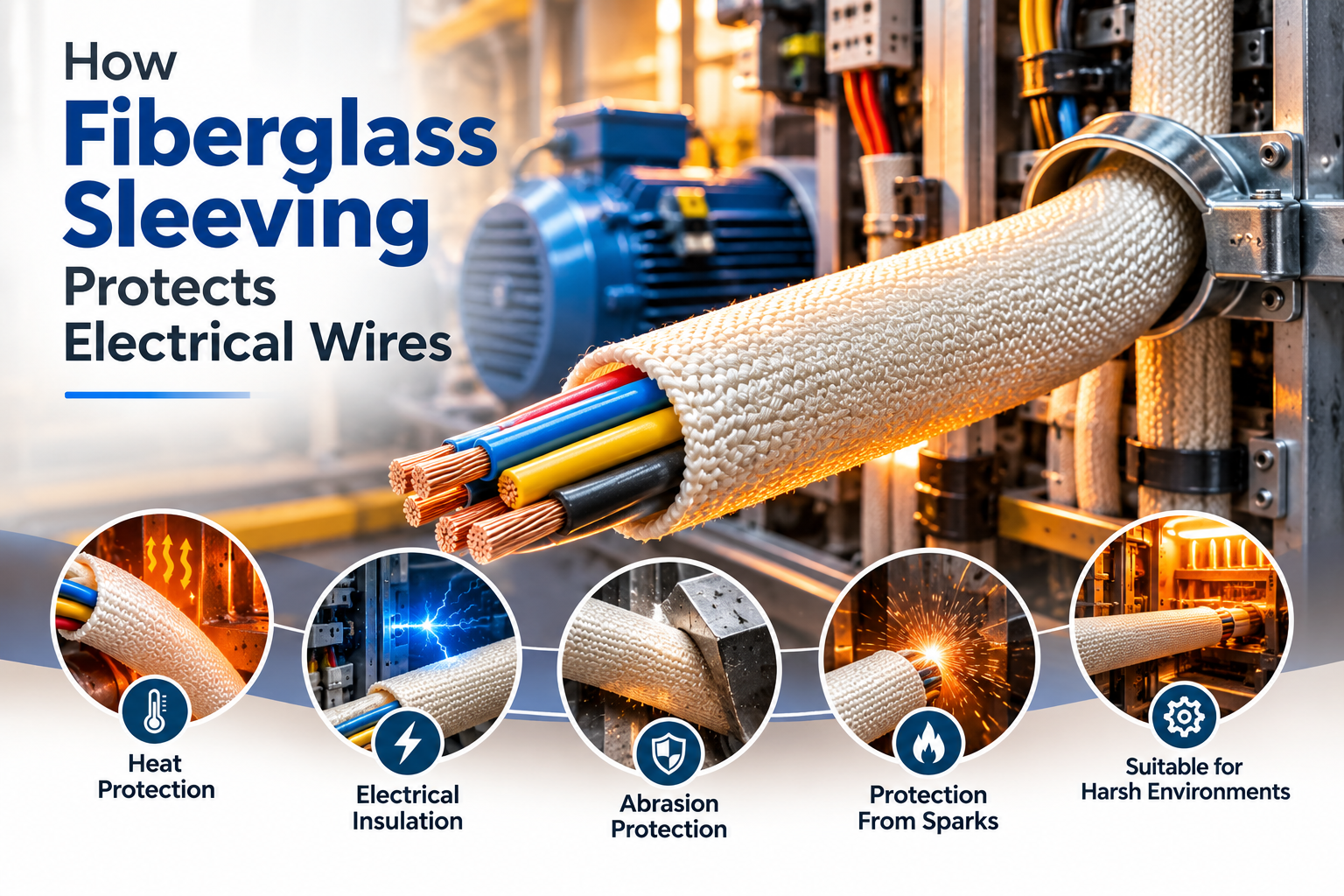
Imagine a wire running close to a hot motor inside a machine. Over time, heat can damage its insulation, expose the conductor, and create a risk of electrical failure. This is where Fiberglass Sleeving for Electrical Wires becomes useful. It adds a protective layer around wires and helps them withstand high temperatures and demanding working conditions.
What Is Fiberglass Sleeving?
Fiberglass sleeving is a protective tube made from woven or braided glass fibres. It is designed to cover electrical wires, cables, and other components that need additional protection.
Unlike ordinary plastic insulation, fiberglass materials are suitable for applications where wires may be exposed to higher temperatures. Depending on its construction and coating, fiberglass sleeving can also provide protection against abrasion, sparks, and certain environmental conditions.
It is commonly used in electrical equipment, industrial machines, motors, transformers, and heating systems.
How Fiberglass Sleeving Protects Wires
1. Heat Protection
Fiberglass sleeving is mainly used in applications where high temperatures can affect normal wire insulation.
It creates a protective barrier around the wire and helps reduce direct exposure to heat from nearby components. This makes it useful in motors, ovens, industrial heaters, and other heat-producing equipment.
The actual temperature resistance depends on the sleeving type, coating, and manufacturer's specifications. Always check the product rating before selecting it.
2. Electrical Insulation
Fiberglass sleeving can provide an additional insulating layer around electrical conductors and connections.
It helps reduce the chance of accidental contact between nearby conductive parts when the correct product is selected and installed properly.
However, it should not automatically be treated as a replacement for the original wire insulation. Its dielectric properties and suitability must match the electrical application.
3. Protection Against Abrasion
Wires installed inside machines or electrical panels may rub against metal edges, moving parts, or other surfaces.
Repeated friction can damage the outer insulation and expose the conductor.
Fiberglass sleeving creates a protective covering that helps reduce this type of wear. It is especially useful in areas where cables experience regular movement or contact with surrounding components.
4. Protection From Sparks
In certain industrial environments, wires may be exposed to sparks or brief contact with hot particles.
Suitable fiberglass sleeving can help protect the covered wire from these conditions. Some versions are specially treated for improved resistance to heat and flame.
The level of protection depends on the product specification, so it is important to choose a suitable grade for the working environment.
Common Types of Fiberglass Sleeving
1. Braided Fiberglass Sleeving
Braided fiberglass sleeving is made by weaving glass fibre strands into a flexible tubular structure.
It can expand or adjust slightly to fit different wire sizes, depending on its construction. It is commonly used in electrical equipment and industrial wiring applications.
2. Silicone-Coated Fiberglass Sleeving
This type has a fiberglass base with a silicone coating.
The coating provides additional surface protection and can improve flexibility and resistance to moisture, depending on the product design.
It is commonly considered for applications involving heat, electrical insulation, and mechanical protection.
3. Acrylic-Coated Fiberglass Sleeving
Acrylic-coated fiberglass sleeving has a protective acrylic coating over its fiberglass structure.
It is used in applications where additional surface protection and handling properties are required. Its temperature and chemical resistance depend on the specific product grade.
4. Heat-Treated Fiberglass Sleeving
Some fiberglass sleeving products are specially treated to improve their performance in high-temperature environments.
These products are selected according to the operating temperature and the conditions in which the wires will be installed.
Where Fiberglass Sleeving Is Used
1. Electric Motors
Electric motors produce heat during operation. Wires and connections located near motor components may need additional protection.
Fiberglass sleeving helps protect these wires from heat and mechanical wear.
2. Industrial Machines
Industrial equipment often contains complex wiring systems. Wires may be installed near hot surfaces, metal components, and moving parts.
Protective sleeving helps improve the durability of these wiring arrangements.
3. Transformers
Transformers contain electrical connections and winding-related components that operate under specific thermal and electrical conditions.
Suitable insulating materials, including certain fiberglass-based products, may be used where their specifications meet the application requirements.
4. Heating Equipment
Heating systems, ovens, and industrial heaters can expose nearby wires to elevated temperatures.
Fiberglass sleeving provides an additional protective covering for wires installed in these areas.
5. Automotive and Electrical Equipment
Some automotive and electrical applications require wire protection against heat, vibration, and friction.
The correct type of fiberglass sleeving can help protect wiring in areas where ordinary cable coverings may not be suitable.
Benefits of Fiberglass Sleeving
Fiberglass sleeving offers several practical benefits when selected for the correct application:
High-temperature resistance: Suitable grades can handle demanding thermal conditions.
Mechanical protection: Helps reduce damage caused by rubbing and abrasion.
Electrical insulation: Provides an additional insulating barrier when properly specified.
Flexible installation: Braided versions can fit around different wire arrangements.
Improved wire protection: Helps protect cables in industrial and electrical environments.
Multiple options: Available in different sizes, coatings, and constructions.
The right product can help improve the protection and service life of electrical wiring.
How to Choose the Right Fiberglass Sleeving
1. Check the Temperature Rating
Start by understanding the maximum temperature the wire may experience during normal operation and under expected working conditions.
Choose sleeving with a suitable temperature rating. Do not select a product based only on its appearance or general description.
2. Select the Correct Diameter
The sleeving should fit properly around the wire or cable.
If it is too tight, installation may become difficult. If it is too loose, it may not provide the intended level of coverage.
Check the internal diameter and expansion range, where applicable.
3. Consider the Coating
Different coatings offer different properties.
Silicone-coated and acrylic-coated versions may be suitable for different working conditions. Consider heat exposure, moisture, flexibility, and the surrounding environment before choosing.
4. Check Electrical Requirements
If the sleeving is being used for electrical insulation, check its dielectric strength and other relevant electrical specifications.
The product should meet the requirements of the equipment and application.
5. Understand the Working Environment
Consider whether the wires will be exposed to vibration, friction, moisture, chemicals, or sparks.
Choosing sleeving according to actual working conditions can help avoid premature damage.
Fiberglass Sleeving vs Ordinary Wire Covering
Ordinary plastic wire coverings are suitable for many everyday electrical applications. However, they may not be suitable for areas exposed to high temperatures.
Fiberglass sleeving is designed for more demanding conditions where additional thermal or mechanical protection is required.
The choice depends on the application. Not every wire needs fiberglass sleeving, and not every fiberglass product is suitable for every industrial environment.
Always compare product specifications before making a selection.
Installation and Handling Tips
Proper installation is important for getting the expected performance from fiberglass sleeving.
Measure the wire before selecting the sleeving.
Cut the material to the required length using suitable tools.
Cover the intended wire section completely.
Avoid damaging the sleeving during installation.
Keep it away from sharp edges where possible.
Follow the manufacturer's instructions for temperature and electrical use.
Inspect the sleeving regularly for wear, cuts, or other damage.
For electrical work, always disconnect the power before handling wires and follow appropriate safety procedures.
Conclusion
Fiberglass sleeving is a useful protective solution for electrical wires exposed to high temperatures, friction, and demanding industrial conditions. It adds an extra layer of protection and can help improve the reliability of wiring when the correct product is selected.
From electric motors and transformers to industrial machines and heating equipment, Fiberglass Sleeving for Electrical Wires has several practical applications.
Before purchasing, check the temperature rating, diameter, coating, electrical properties, and working environment. Choosing the right sleeving is not just about covering a wire; it is about providing protection that matches the actual application.
If you need fiberglass sleeving for an electrical or industrial application, contact HS Electronics. Share your wire size, temperature requirements, and intended use to help identify a suitable product.
Frequently Asked Questions (FAQs)
1. What is fiberglass sleeving used for?
Fiberglass sleeving is used to protect electrical wires and cables from heat, abrasion, and other demanding working conditions.
2. Is fiberglass sleeving heat resistant?
Yes. Fiberglass sleeving is available in grades designed for high-temperature applications. The exact temperature limit depends on the product and its coating.
3. Can fiberglass sleeving provide electrical insulation?
Yes. Suitable fiberglass sleeving can provide an additional insulating layer. Always check its dielectric rating and suitability for the intended electrical application.
4. Where is fiberglass sleeving commonly used?
It is commonly used in electric motors, transformers, industrial machines, heating equipment, and electrical assemblies.
5. What is silicone-coated fiberglass sleeving?
It is fiberglass sleeving with a silicone coating. The coating provides additional surface protection and may improve flexibility and resistance to certain environmental conditions.
6. How do I select the correct fiberglass sleeving size?
Measure the wire or cable diameter and select a sleeving size that fits properly. Also check the product's expansion range, where applicable.
7. Can fiberglass sleeving replace normal wire insulation?
Not automatically. It is generally used as an additional protective covering. The original wire insulation and the electrical requirements of the application must still be considered.