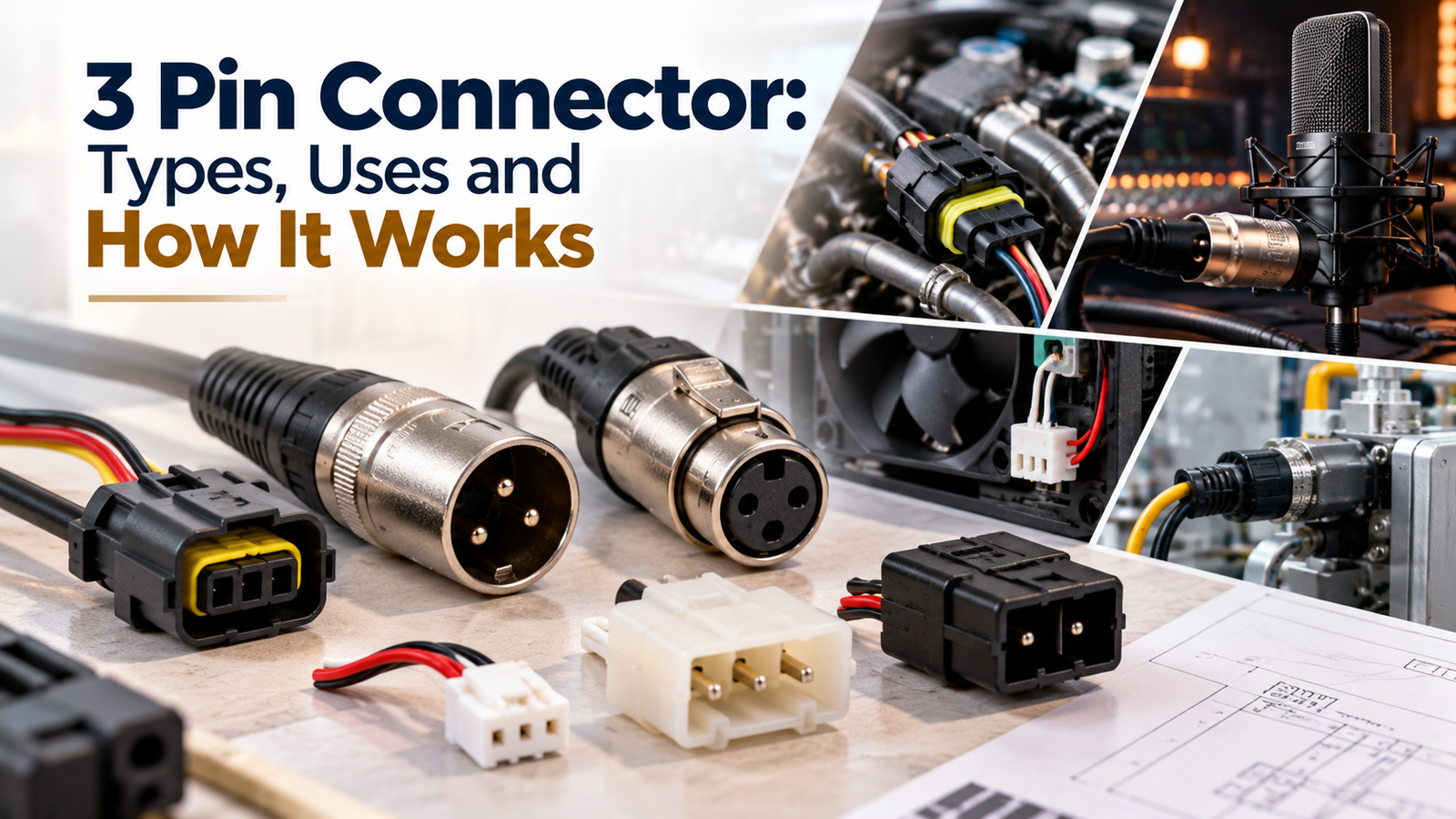
If you’ve ever opened up a piece of equipment and spotted a small plastic plug with exactly three metal pins sticking out, you’ve seen a 3 pin connector. They’re everywhere once you start noticing them, inside appliances, cars, audio equipment, computers, sensors. This guide breaks down what they actually are, the common types you’ll come across, and how they work, in simple, plain words.
What Is a 3 Pin Connector?
At its simplest, a 3 pin connector is exactly what it sounds like, a connector with three separate contact points, or pins, used to carry current, signals, or a mix of both through a single, removable connection. Instead of wiring things together permanently with solder, a connector lets you plug and unplug a connection whenever you need to, for repairs, upgrades, or simple maintenance.
The “3” in the name just tells you how many separate conductors it carries. Compare this to a simpler 2 pin connector, which only carries two, or larger multi-pin versions used for more complex circuits.
Why Three Pins Instead of Two?
A basic wiring connectors setup with just two pins can only carry a simple circuit, usually power going one way and returning the other. A third pin opens up more possibilities. Depending on the application, that third pin might carry:
A ground or earth connection, for electrical safety
A signal wire, separate from the power lines
A second power line, for circuits that need more than one voltage path
This is why three-pin connectors show up in such a wide range of applications, the extra pin gives engineers more flexibility in what the connector can actually do.
Common Types of 3 Pin Connectors
XLR Connectors
You’ll find these mostly in audio equipment, microphones, speakers, professional sound systems. They have a distinctive round shape with a locking mechanism that clicks into place, keeping the connection secure even with cables being moved around a lot, like on a stage.
DIN Connectors
These are circular connectors with a metal shroud that locks the plug firmly into its socket. The design is “keyed,” meaning it can only be inserted one specific way, which helps prevent accidental incorrect connections. You’ll still find these in some older audio and control equipment.
Molex Connectors
Common inside computers and various electronic devices, Molex-style connectors are typically plastic-bodied with a simple, functional design, used to carry power between internal components.
JST Connectors
Small and lightweight, these are popular in consumer electronics and smaller devices where space is limited. They’re built for lower current applications but offer a secure, compact connection.
Automotive 3 Pin Connectors
Cars rely heavily on 3 pin connectors for things like sensors, lighting circuits, and smaller accessory systems. These are usually built with extra sealing and locking features, since vehicles deal with constant vibration and sometimes moisture exposure.
How a 3 Pin Connector Actually Works
A male female connector pair is how most 3 pin connectors function. The male side has three pins sticking outward. The female side has three matching sockets designed to receive them. When you push the two halves together, each pin lines up with its correct matching socket, completing the circuit for all three connections at once.
Good connectors are designed so this only fits together one way, this is called “keying,” and it prevents someone from accidentally connecting the pins in the wrong order, which could cause a short circuit or damage the equipment.
Where You’ll Actually Find 3 Pin Connectors
In audio equipment: Microphones and professional sound gear commonly use XLR-style 3 pin connectors for clean, reliable signal transfer.
In vehicles: Sensors, small lighting circuits, and various accessory systems in cars often rely on 3 pin connectors, usually built tough enough to handle vibration and weather exposure.
In computers and electronics: Internal components, fans, smaller power connections, often use compact 3 pin connectors to link different parts of the system together.
In industrial equipment: Motors, compressors, and various tools use heavier-duty 3 pin connectors built to handle higher current loads safely.
How to Choose the Right One
Think About What It’s Actually Carrying
Is this connector handling power, a signal, or both? Different 3 pin connector types are built for different combinations, so matching the type to your actual need matters more than just picking whatever looks right.
Check the Current and Voltage Rating
Just like with any power connector, a 3 pin connector needs to be rated for the actual load it’ll carry. Using one rated for light signal work in a higher-power application can lead to overheating or failure over time.
Consider the Environment
Will this connector sit safely indoors, or will it face vibration, moisture, or outdoor exposure, like in a vehicle or outdoor equipment? If so, look for connectors specifically built with sealing and locking features suited to tougher conditions.
Think About How Often It’ll Be Connected and Disconnected
A connector meant for occasional maintenance access needs different durability than one that’s installed once and left permanently in place.
Why Quality Matters With 3 Pin Connectors
A connector might look simple, but poor quality, weak contact plating, a loose locking mechanism, thin internal wiring, can lead to real problems, intermittent connections, overheating, or a connector that simply wears out faster than it should. This matters even more in applications like automotive wiring, where constant vibration puts extra strain on every connection point.
When sourcing electronics products involving 3 pin connectors, it’s worth checking the build quality directly, not just assuming one connector is as good as another simply because it looks similar.
A Simple Checklist Before You Buy
Confirm whether the connector is handling power, signal, or both
Check the actual current and voltage rating needed for your application
Consider whether the environment needs extra sealing or vibration resistance
Think about how often the connection will be made and broken
Check the quality of the contact pins and locking mechanism, not just the price
Final Thoughts
3 pin connectors might look like a small, simple part, but they show up in a huge range of everyday equipment, from the microphone on a stage to the sensors inside a car. Understanding the basic types and what to check before choosing one makes it a lot easier to pick the right connector for your specific application, rather than just grabbing whatever looks close enough.
If you’re sourcing 3 pin connectors or other wiring components for your project, reach out to HS Electronics. Share your application details, and the team can guide you toward a pin connector that’s genuinely rated and built for what you’re actually working on.