Introduction
Electrical connections are an essential part of almost every modern product. From home appliances and air conditioners to automobiles and industrial machines, reliable wiring helps equipment work safely and efficiently. Even a small connector or wire can make a big difference in the performance of the complete system.
Noida has a growing business environment for electronics, electrical equipment, automotive components, and manufacturing. Businesses looking for wiring harness manufacturers in Noida often need products that meet specific technical requirements, offer consistent quality, and support their production needs.
Whether you are looking for an electrical harness, automotive wiring components, connectors, or electrical wires, choosing the right product requires careful consideration. The correct choice depends on the application, operating conditions, wire specifications, and compatibility with other components.
In this guide, we will explore the different types of wiring products, explain what to check before purchasing them, and discuss how businesses can choose suitable electronic and electrical components in Noida.
1. Understanding Wiring Harnesses and Their Applications
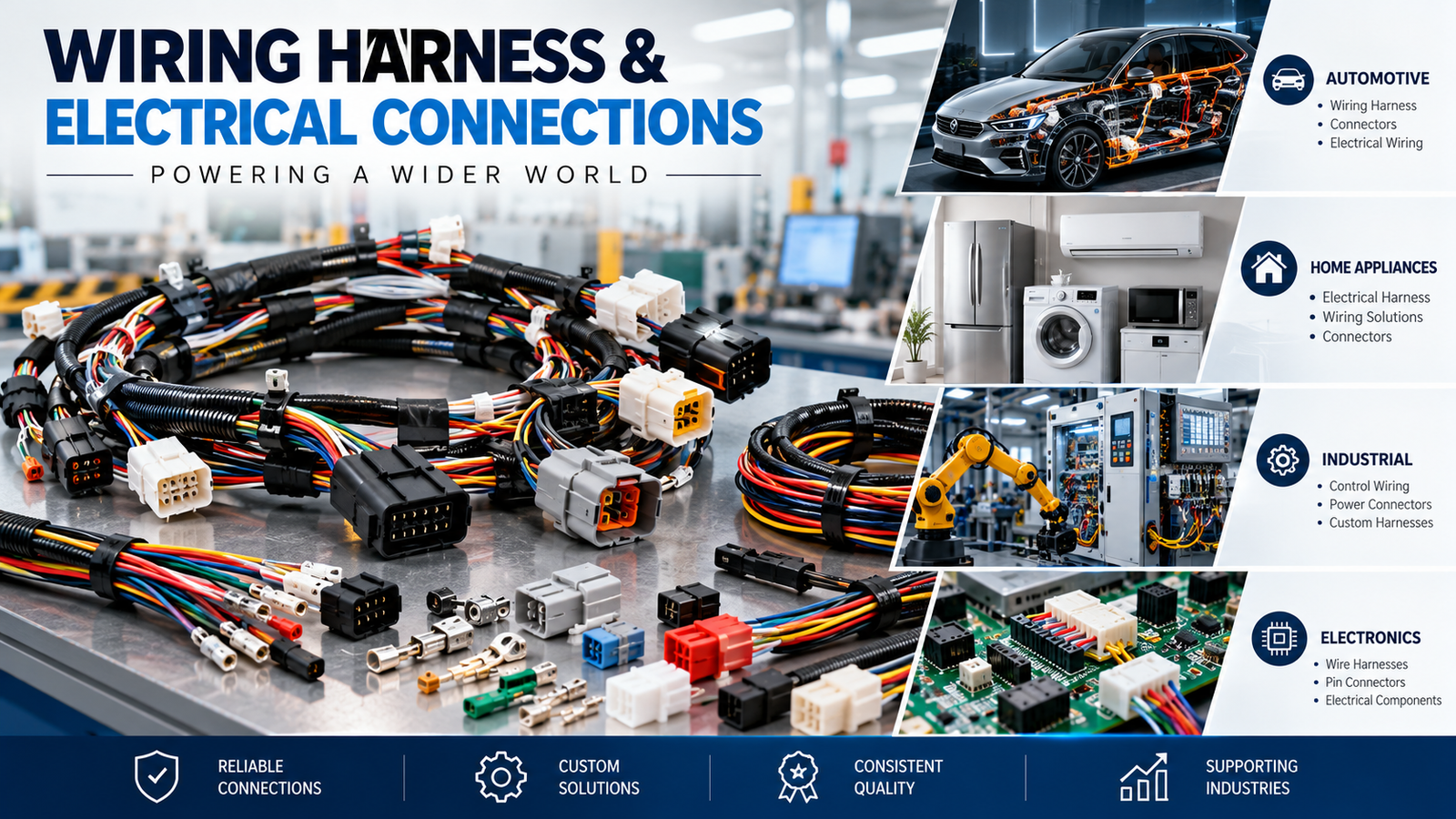
A wiring harness is an organised group of wires, terminals, and connectors designed to carry electrical power or signals between different components. Instead of managing many separate wires, a harness keeps them arranged in a structured and convenient form.
A properly designed wiring harness can simplify installation, support easier maintenance, and help protect wires from tangling or unnecessary movement.
An electrical harness may be used in several applications, including:
Automotive electrical systems.
Home appliances and air conditioning equipment.
Industrial machinery and control panels.
Electronic devices and equipment.
Lighting systems and electrical assemblies.
Power distribution and control applications.
The design of the harness depends on the product in which it will be used. A harness intended for a vehicle may require different materials and protection from one used inside a household appliance.
If you are searching for wiring harness manufacturers in Noida, first identify your application's requirements. This will help you choose a product that fits your equipment rather than selecting a harness based only on its appearance or price.
2. Choosing the Right Electrical Wiring
Electrical wiring connects different parts of a system and allows electricity to reach the components that need it. The type of wire required depends on the amount of current, operating voltage, temperature, installation environment, and intended use.
For example, wire for home electrical applications may have different specifications from wires used in automotive equipment or industrial machinery.
Before selecting a wire, consider the following factors:
Conductor material and wire size.
Voltage and current requirements.
Insulation material and temperature rating.
Resistance to moisture, heat, and abrasion.
Flexibility and installation requirements.
Applicable safety standards.
Choosing the correct wire electrical wire specifications helps reduce the risk of overheating, poor connections, and premature damage.
Businesses should also consider the complete wiring arrangement. A suitable wire must work properly with its terminals, connectors, insulation, and the equipment in which it is installed.
For manufacturing and assembly work, consistent wire quality is particularly important because even small differences can affect installation and product performance.
3. Automotive Wiring Harness for Modern Vehicles
Vehicles contain many electrical systems, including lighting, sensors, air conditioning, entertainment systems, and engine-related controls. These systems depend on properly organised electrical connections.
An automotive wiring harness connects different electrical components throughout a vehicle. It helps organise the wiring and supports reliable communication or power delivery between compatible components.
The automotive electrical wiring harness must be suitable for the conditions in which it operates. Depending on its location, it may experience vibration, temperature changes, moisture, or repeated movement.
When selecting wiring harnesses for cars, check the following:
Compatibility with the vehicle and its electrical system.
Correct wire sizes and connector arrangements.
Suitable insulation and protective covering.
Secure terminals and locking mechanisms.
Resistance to the expected operating conditions.
Proper identification and routing of wires.
An auto electrical wiring harness should not be selected only because it looks similar to the original. Differences in pin arrangements, wire specifications, or connector design can affect compatibility.
For automotive manufacturers, repair businesses, and component suppliers, selecting the correct automotive wiring products can help improve assembly consistency and simplify maintenance.
4. Why Wiring Connectors Matter
Wires need reliable connection points to transfer power or signals between components. This is where wiring connectors become important.
Connectors are available in many shapes, sizes, and configurations. The correct type depends on the equipment, number of contacts, electrical rating, and installation method.
Common options include:
Power connector: Used for compatible power connections.
Pin connector: Provides a contact point for electrical connections.
Female connector: Designed to receive a matching contact.
Male female connector: A matching pair used to connect compatible components.
Wire connector harness: A connector arrangement integrated into a wiring assembly.
For smaller electronic devices, a 2 pin connector may be suitable when the application requires two electrical contact points. However, not all two-pin connectors are interchangeable.
Before purchasing a 2 pin wire connector, confirm the pin spacing, electrical rating, wire compatibility, locking mechanism, and physical dimensions. A 2 pin female connector must match the corresponding connector design.
Similarly, 2 pin male and female connectors should be selected as a compatible pair rather than as separate components based only on their appearance.
For larger production requirements, it is useful to check connector availability and product consistency before finalising an order.
5. Heat Shrink Tubes for Better Wire Protection
Wiring systems often require additional protection around joints, terminals, and exposed sections. Heat shrink products are commonly used for this purpose.
A heat shrink tube is a flexible sleeve that contracts when heated according to its specifications. It can provide insulation and help protect suitable connections from abrasion and environmental exposure.
Before choosing a wire heat shrink tube, consider its diameter before and after shrinking, shrink ratio, operating temperature, material, and intended application.
Heat shrink products are commonly used in:
Electrical wiring assemblies.
Automotive wiring protection.
Connector and terminal insulation.
Cable identification and bundling.
Electronic equipment assembly.
The right shrink tube should fit the wire or connection correctly. It should not be so large that it fails to provide the intended coverage or so small that it cannot be installed properly.
It is also important to use the correct heating method and follow the manufacturer's instructions. Heat shrink tubing is useful for protecting suitable connections, but it does not replace the need for correctly rated connectors and proper electrical installation.
6. Electrical Wiring for Air Conditioners and Home Appliances
Air conditioners and other home appliances depend on suitable electrical wiring to operate correctly. Their wiring requirements can vary depending on the appliance's power rating, design, and electrical components.
AC wiring may include power connections, control wiring, and internal wiring assemblies. Each part must be suitable for its specific purpose.
An air conditioning wire should be selected according to the equipment manufacturer's specifications and the relevant electrical requirements. Using an unsuitable wire or connector may lead to overheating, poor performance, or safety problems.
When selecting wiring for appliances, check:
The required wire size and insulation rating.
The operating temperature.
Compatibility with the appliance terminals.
The expected electrical load.
Applicable safety and installation requirements.
For manufacturers and assembly businesses, using consistent electronics wiring components can make production more organised and help reduce avoidable compatibility issues.
Electrical installation and repair should always be carried out by qualified professionals where required.
7. Selecting Wiring Products for Industrial Applications
Industrial equipment often contains motors, sensors, switches, controllers, and other electrical components. These systems may operate for long periods and require dependable connections.
Industrial electronics applications can involve different electrical loads, temperatures, and environmental conditions. As a result, the selection of wires, connectors, and harnesses needs to be based on the equipment's requirements.
For example, industrial wire may need to meet particular insulation, flexibility, temperature, or durability specifications. The appropriate product depends on whether it is used for power transmission, signal connections, or control systems.
Businesses should also consider the quality of terminals, the security of connector locks, and the protection provided to the complete assembly.
A well-organised wiring and harness arrangement can make equipment easier to assemble, inspect, and maintain. It can also help technicians identify individual connections when troubleshooting a problem.
When buying wiring products in bulk, ask for product specifications and confirm that the selected items are suitable for the intended application.
8. What to Check Before Choosing a Supplier in Noida
If you are looking for an electronics manufacturer in Noida or a supplier of wiring products, it is worth comparing more than just prices.
The right supplier should be able to explain the available product specifications and help you identify the components that match your requirements.
Consider these points before placing an order:
Product range: Check whether the supplier offers the required wires, harnesses, connectors, and related components.
Technical information: Ask for specifications covering dimensions, materials, electrical ratings, and compatibility.
Quality consistency: For repeat orders, check whether the supplier can provide consistent products across batches.
Order quantities: Confirm minimum order quantities, bulk availability, and delivery timelines.
Communication: Clear communication can help prevent mistakes when ordering products with specific dimensions or connector arrangements.
Businesses looking for electrical harness manufacturers should also clarify whether they need standard products or a harness designed for a particular application.
The more accurately you explain your requirements, the easier it becomes to identify suitable components.
9. The Role of Electronics Manufacturing in India
The electronics industry in India includes a wide range of activities, from electronic assembly and component supply to automotive systems and industrial equipment.
As electronic products become more common, the need for suitable wires, connectors, cable assemblies, and related components remains important.
For an electronics manufacturer, component selection is a key part of product planning. The quality and compatibility of electrical connections can affect assembly efficiency, maintenance, and the reliability of the finished product.
Businesses involved in India electronics manufacturing should pay attention to product documentation, material specifications, testing requirements, and applicable standards.
Choosing components based on technical needs rather than appearance alone can help businesses make better purchasing decisions.
Conclusion
Choosing the right wiring products requires an understanding of the application, electrical specifications, connector compatibility, insulation, and operating conditions. From an automotive wiring harness to a simple 2 pin connector, each component should match the requirements of the equipment in which it will be used.
For businesses searching for wiring and electronic components in Noida, it is important to check product specifications, compare suitable options, and work with suppliers who can clearly explain their products.
Whether you need electrical wiring connectors, heat shrink tubing, power connectors, or complete wiring assemblies, careful selection can help improve installation, support consistent manufacturing, and reduce avoidable connection problems.
To explore electronic and wiring-related products, visit HS Electronics.