Introduction
Electrical connectors are small components, but they play an important role in making electronic devices and electrical systems work properly. From home appliances and lighting products to automotive systems and industrial equipment, connectors help establish a secure connection between wires and electrical components.
A 2 pin connector is one of the most commonly used connector types. It provides two electrical connection points and is used in many applications where a simple and reliable connection is required. However, choosing the right connector is important for safety, performance, and long-term use.
If you are looking for a 2 pin connector in Noida, you may find different sizes, designs, materials, and connection types. The right choice depends on how you plan to use the connector, the electrical requirements of your equipment, and the conditions in which it will operate.
In this blog, we will explain how to choose a suitable 2 pin connector, what features to check, and why selecting a reliable supplier matters.
What Is a 2 Pin Connector?
A 2 pin connector is an electrical component designed to connect two conductors or electrical contact points. Depending on its design, it may be used to connect power wires, link electronic components, or connect one part of an electrical system to another.
These connectors are available in different shapes and configurations. Some are designed for circuit boards, while others are used with cables, appliances, automotive equipment, and electronic products.
A 2 pin connector male and female arrangement is also common. The male part generally has pins or projecting contacts, while the female part contains matching contact openings. When connected correctly, the two parts create an electrical connection.
The connector you choose should match the requirements of your application rather than simply being selected by appearance or price.
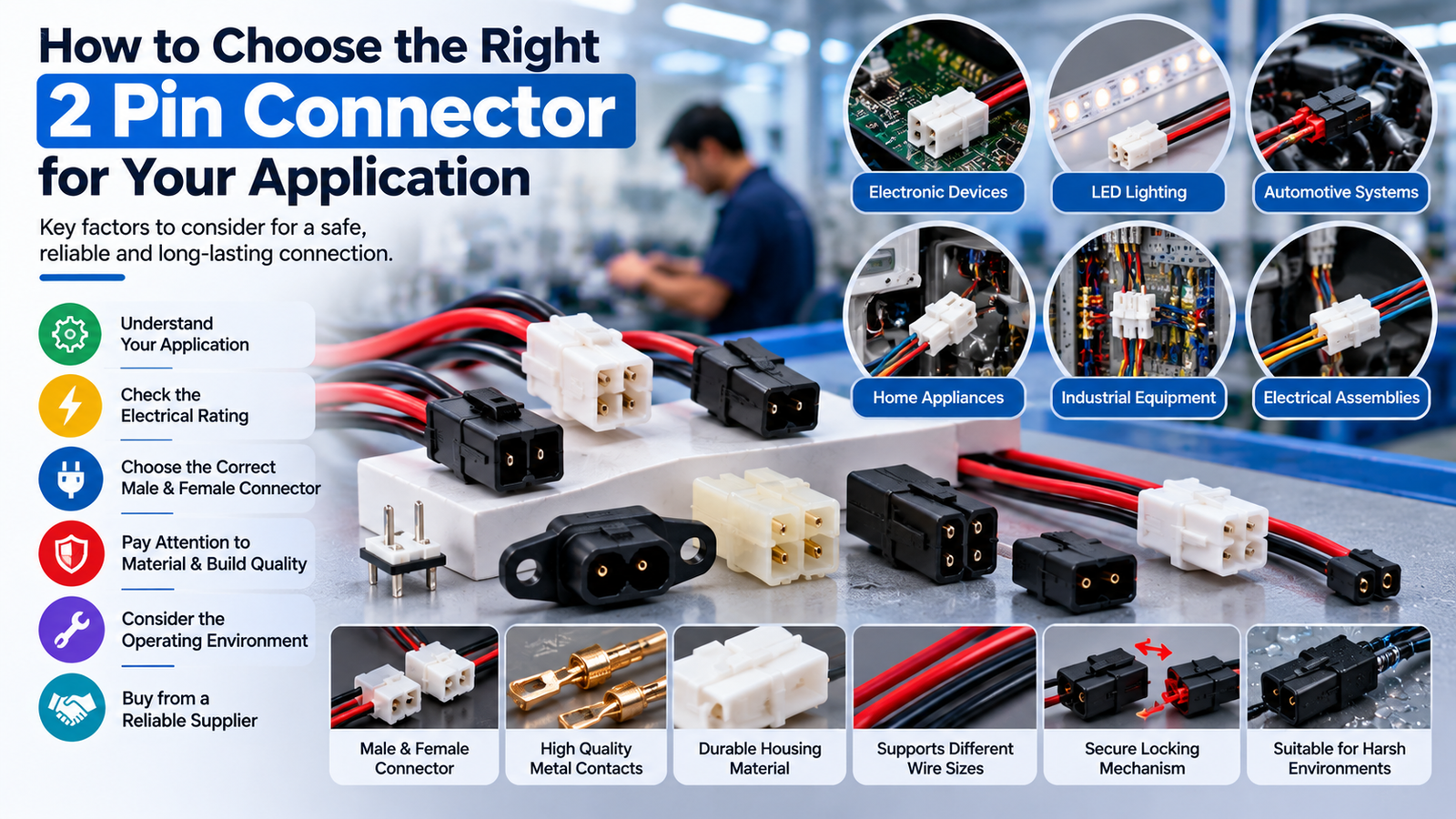
1. Understand Your Application
The first step is to understand where and how the connector will be used. Different applications require different connector designs.
For example, connectors used in electronic devices may have different requirements from those used in automotive systems or industrial equipment.
Consider these common applications:
Electronic products: Connecting wires to electronic devices and components.
Home appliances: Supporting suitable internal electrical connections.
LED lighting: Connecting compatible lighting components and power wires.
Automotive systems: Connecting electrical circuits in vehicles.
Industrial equipment: Connecting components in machinery and control systems.
Electrical assemblies: Joining compatible wires and components.
If you are purchasing connectors for manufacturing, check the equipment specifications before placing an order. A connector that works well in one application may not be suitable for another.
2. Check the Electrical Rating
Electrical specifications are among the most important factors when selecting a connector.
Before buying a 2 pin connector, check its rated voltage and current capacity. These ratings should meet the requirements of the equipment in which the connector will be installed.
Using a connector with an unsuitable rating can lead to overheating, poor performance, or electrical failure.
You should also consider the following:
The operating voltage of the equipment.
The expected current flowing through the connection.
The wire size supported by the connector.
The quality of the contact material.
The insulation and temperature ratings.
Do not assume that every two-pin connector has the same electrical capacity. Always verify the manufacturer's specifications and choose a connector that meets the requirements of your system.
3. Choose the Correct Male and Female Connector
Many applications use a male female connector arrangement to make connections easier to assemble and disconnect.
A 2 pin connector male and female set consists of two matching parts designed to fit together. Selecting the correct pair is important because connectors that look similar may have different dimensions, pin spacing, locking mechanisms, or electrical ratings.
Before purchasing, check:
Whether both connector halves are compatible.
The number and arrangement of pins.
The physical dimensions and pin spacing.
The locking or retention mechanism.
The wire connection method.
The required electrical rating.
A properly matched male female connector can help reduce loose connections and make maintenance easier. However, the connector must be installed correctly and used within its specified limits.
4. Pay Attention to Material and Build Quality
The material used in a connector affects its durability, conductivity, and ability to withstand operating conditions.
Metal contacts provide the electrical connection, while the outer housing helps support and insulate the connection. The exact material requirements depend on the intended application.
When comparing wiring connectors, look for consistent manufacturing quality, secure contact retention, suitable insulation, and a design that matches the operating environment.
For applications exposed to vibration, heat, dust, or moisture, check whether the connector is designed and rated for those conditions.
A low-cost connector may appear suitable initially, but poor contact quality or weak construction can result in additional maintenance and replacement costs. It is better to compare the complete specifications instead of choosing only by price.
5. Consider Wire Size and Connection Type
Not every connector supports every wire size. The wire must fit correctly within the connector's terminal or contact system.
Before ordering a 2 pin connector, check the supported wire gauge, conductor type, and termination method. Some connectors use crimped terminals, while others may use screw terminals or other connection methods.
A poor match between the wire and connector can result in an unreliable connection.
For manufacturing applications, consistency is particularly important. If connectors are being used in a production line, ensure that the selected model supports the required wire specifications and assembly process.
The correct combination of wire, terminal, and connector housing helps create a stable electrical connection.
6. Check Safety and Environmental Requirements
The operating environment can influence which connector is suitable.
For example, a connector used inside a protected electronic device may have different requirements from one installed in a vehicle or industrial machine.
Depending on the application, check:
Operating temperature range.
Insulation performance.
Resistance to vibration.
Protection against dust and moisture.
Contact durability.
Applicable safety and compliance requirements.
If the connector will be used in an environment with moisture or other contaminants, verify its protection rating rather than assuming that it is sealed.
For automotive applications, vibration resistance and secure locking can be especially important. A connector must be suitable for the environment in which it will be installed.
7. Compare Prices Without Ignoring Quality
Price is an important consideration when purchasing connectors, particularly for businesses that need large quantities.
However, the cheapest option is not always the most economical choice over time. Poor-quality connectors may require frequent replacement, cause assembly delays, or create reliability problems.
When comparing suppliers, consider the following factors:
Product specifications and consistency.
Material and manufacturing quality.
Availability of matching connector pairs.
Minimum order quantity.
Delivery timelines.
Technical support and product documentation.
Bulk purchasing options.
If you are buying for regular production, ask for the relevant technical specifications before confirming the order. This helps ensure that the connector matches your requirements and reduces the risk of purchasing an unsuitable product.
8. Finding a Suitable 2 Pin Connector Supplier in Noida
Noida is an important location for electronics-related businesses, industrial suppliers, and manufacturing activities. Businesses searching for a 2 pin connector in Noida should focus on finding a supplier that can provide products suited to their technical and commercial requirements.
Start by identifying the connector type you need. Share details such as the intended application, wire size, electrical rating, connector dimensions, and required quantity.
You should also ask whether the supplier can provide the relevant product specifications and whether matching male and female connectors are available.
For manufacturers, purchasing the correct connector in consistent quantities can make production planning easier. A clear understanding of your requirements also helps suppliers identify a suitable product more efficiently.
Avoid placing an order based only on a product photograph. Two connectors may look similar while having different pin arrangements, ratings, or dimensions.
9. Why 2 Pin Connectors Matter in Electronics Manufacturing
The electronics industry depends on many small components working together. Connectors are essential because they help link wires, circuit boards, power sources, and other components.
Reliable wiring connectors can support easier assembly, maintenance, and replacement when used correctly. They are also important in products that require repeatable connections during manufacturing.
For an electronics manufacturer, selecting standardised and compatible connector models can help simplify inventory management and assembly processes.
Similarly, businesses involved in electrical assemblies should consider how connectors fit into the complete wiring system. The connector, wire, terminal, insulation, and housing must all be compatible.
Careful selection at the purchasing stage can help prevent avoidable problems during installation and product testing.
Common Mistakes to Avoid When Buying a 2 Pin Connector
Before placing your order, avoid these common mistakes:
Ignoring electrical ratings: Always confirm voltage and current requirements.
Choosing an incompatible connector pair: Check that the male and female parts fit correctly.
Overlooking wire size: Verify that the connector supports the intended wire.
Ignoring the operating environment: Check temperature, vibration, and moisture requirements.
Buying based only on price: Compare quality, specifications, and supplier reliability.
Skipping product documentation: Review technical information before ordering.
Assuming all two-pin connectors are interchangeable: Verify dimensions, pin spacing, and connection type.
Taking a little time to check these details can help you select the right connector for your application.
Conclusion
Choosing the right 2 pin connector involves more than finding a product with two pins. You need to consider the application, electrical rating, connector compatibility, wire size, build quality, and operating environment.
If you are searching for a 2 pin connector in Noida, compare the available options carefully and confirm the technical specifications before making a purchase. For businesses and manufacturers, selecting compatible and consistent connectors can help improve assembly efficiency and reduce avoidable electrical connection problems.
The best connector is one that meets your application's requirements, works reliably with the other components, and is suitable for its intended operating conditions.
For more information about electronic components and related products, visit HS Electronics.