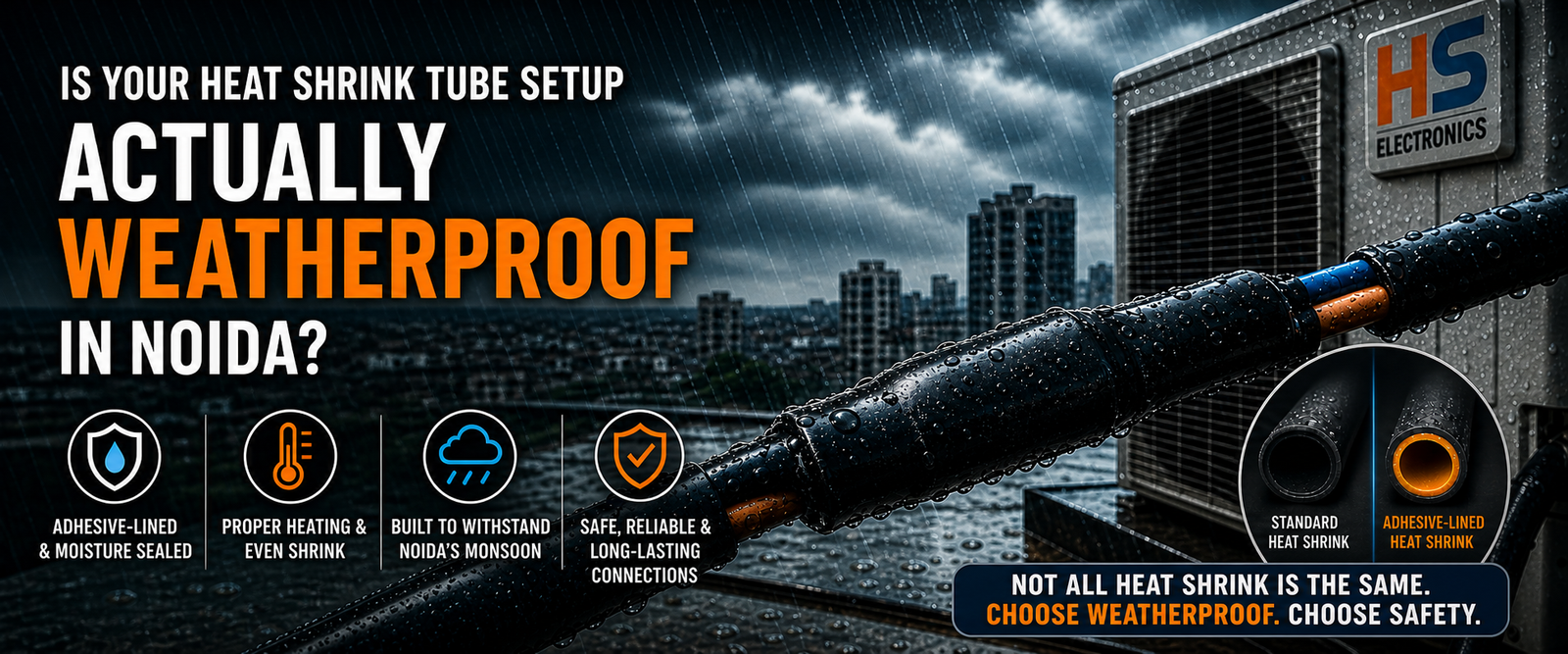
Here’s a question worth sitting with honestly: when you added heat shrink tubing to your wiring setup, did you actually check whether it provides real weatherproofing, or did you just assume that because it shrinks tightly around the wire, it automatically keeps moisture out?
A lot of people make this assumption, and it’s an understandable one. A heat shrink tube does genuinely tighten around a wire joint, creating a snug, visually sealed look. But snug and sealed aren’t automatically the same thing as weatherproof, especially once Noida’s monsoon season actually puts that connection to the test over weeks of sustained humidity and rain.
Why This Assumption Is So Common
Heat shrink tubing looks protective. It shrinks down tightly, it covers the exposed joint completely, and visually, it appears to do exactly what you’d want: seal things up. This visual confidence is exactly why so many people stop questioning it once it’s applied. It looks done, so it’s assumed to be done properly.
But not all heat shrink tubing is built the same way. Some varieties are genuinely designed with adhesive lining specifically for moisture sealing. Others are purely for insulation and mechanical protection, with no real moisture barrier at all. If you’ve been treating every heat shrink application as automatically weatherproof, that assumption deserves a second look.
Questions Worth Asking About Your Current Setup
Does Your Heat Shrink Actually Have an Adhesive Lining?
This is the single biggest factor separating genuinely weatherproof heat shrink from the standard type. Adhesive-lined tubing creates a real moisture seal once heated, flowing slightly and bonding to both the wire and the underlying insulation. Standard heat shrink without this lining simply wraps tightly; it doesn’t actually create a sealed barrier against water ingress.
Was It Heated Properly and Evenly?
Even genuinely adhesive-lined heat shrink only works correctly if it’s heated evenly across its full length. A rushed job, heated unevenly or for too short a time, can leave gaps where the adhesive hasn’t properly flowed and sealed, creating a weak point that looks fine on the surface but isn’t actually sealed underneath.
Is It Being Used in a Genuinely Outdoor or Exposed Location?
Not every application needs weatherproof-grade heat shrink. A connection safely inside a sealed indoor enclosure doesn’t face the same risk as one on an air conditioning wire running to an outdoor unit, exposed directly to rain, humidity, and temperature swings. If your setup involves any outdoor exposure, this question matters a lot more than it might for a purely indoor connection.
Has This Specific Joint Been Exposed to a Full Monsoon Season Yet?
If your wiring was installed recently, before testing it against real monsoon conditions, you genuinely don’t know yet whether it holds up. A joint that looks perfectly fine in dry weather can behave very differently after weeks of sustained humidity and rain exposure.
Are You Seeing Any Early Warning Signs?
Flickering connections during or after rain, a slight smell near an outdoor junction, or visible discolouration or swelling of the heat shrink itself—these are all signs worth taking seriously rather than dismissing as minor or unrelated.
What Genuinely Weatherproof Heat Shrink Looks Like
- Properly weatherproofed heat shrink setups typically include:
- Adhesive-lined tubing, specifically rated for moisture sealing, not just basic insulation
- Even, thorough heating across the full length, following the manufacturer’s recommended temperature and time
- Correctly sized tubing for the wire diameter; too loose a fit reduces the seal’s effectiveness even with adhesive lining
- Overlap onto both sides of the joint, extending onto the solid insulation on either side, not just covering the bare connection point itself
- No visible gaps, bubbles, or uneven shrinkage once the job is complete
Why This Matters Especially in Noida
Noida’s monsoon isn’t a brief, light drizzle season; it brings sustained heavy rainfall over weeks, along with high humidity that lingers well beyond the rain itself. Outdoor electrical connections, AC units, outdoor lighting, and external junction points face this moisture exposure repeatedly, year after year, not just as a one-time event.
A connection that was sealed properly with genuine weatherproof heat shrink will handle this repeated exposure without issue. One that relied on standard, non-adhesive tubing or was heated inconsistently is far more likely to develop a slow, hard-to-detect moisture problem, the kind that doesn’t cause an immediate failure but gradually corrodes the connection underneath over multiple monsoon seasons.
Signs Your Current Setup Might Not Be Properly Weatherproofed
- You’re not sure whether your heat shrink tubing has an adhesive lining or not
- The installation happened quickly, without much attention to even heating
- You’ve noticed any flickering or inconsistent power specifically during or after rain
- The heat shrink is being used on outdoor connections without any additional protective covering
- You’ve never actually checked the joint after it’s been through a full monsoon cycle
- None of these automatically mean there’s a problem right now. They simply mean you’re currently relying on assumption rather than confirmation, and that gap is worth closing before the next monsoon arrives.
What to Do If You’re Not Sure
- Check What Type of Heat Shrink You’re Actually Using—If you don’t know whether it’s adhesive-lined or standard, this is worth confirming directly, either by checking with whoever installed it or by sourcing the specific product details from your supplier.
- Inspect Outdoor Connections Before the Next Monsoon—A quick visual check, looking for discolouration, swelling, or gaps in the heat shrink, takes only a few minutes and can catch a developing problem before it causes an actual failure.
- Upgrade Standard Heat Shrink to Adhesive-Lined Where It Matters—For any connection genuinely exposed to outdoor moisture, it’s worth specifically using adhesive-lined, weatherproof-rated heat shrink, rather than assuming standard tubing will be sufficient.
- Ask Your Supplier Directly About Weatherproofing Specs—When sourcing electronics products or related components, don’t assume; ask specifically whether the heat shrink tubing being supplied is rated for outdoor, moisture-exposed use, or whether it’s intended purely for basic indoor insulation.
A Simple Self-Check
- Do you know whether your current heat shrink is adhesive-lined or standard?
- Was it heated evenly and fully during installation?
- Is it being used on any genuinely outdoor or exposed connection?
- Has this specific setup been through a complete monsoon season already?
- Have you noticed any warning signs, flickering, discolouration, or odd smells during or after rain?
- If you’re unsure about more than one or two of these, it’s worth a proper check before the next heavy rain season puts it to the real test.
Final Thoughts
Heat shrink tubing looks protective the moment it’s applied, tight, sealed, and visually finished. But genuine weatherproofing depends on specific factors—the right adhesive-lined material, proper even heating, and correct sizing—that aren’t always obvious just by looking at the finished joint. For any connection facing Noida’s monsoon exposure, it’s worth confirming these details rather than assuming the job is automatically weatherproof.
If you want to check whether your current setup is genuinely suited for outdoor, moisture-exposed conditions or need the right weatherproof-rated components from the start, reach out to HS Electronics. Share your application details, and the team can guide you toward heat shrink and connector options actually built for what Noida’s weather puts them through.