How Noida Factories Use Automotive Wiring Harness Systems
10 Oct 2026
H.S. Electronics
7 Min Read
If you have ever driven through the industrial sectors of Noida, you may have noticed that the city is not only about mobile phones and electronics. In areas like Sector 63, Sector 80, Phase 2 and Greater Noida, many factories make a part that hides inside every vehicle: the automotive wiring harness. In this blog, we will explain in simple words how Noida factories use and build these systems, and why they matter so much.
What Is a Wiring Harness?
A modern vehicle has many electrical parts. There are lights, sensors, a music system, the engine control unit, power windows, airbags and much more. All of these need wires to get power and send signals. If every wire were fitted separately, the inside of the car would look like a tangled jungle.
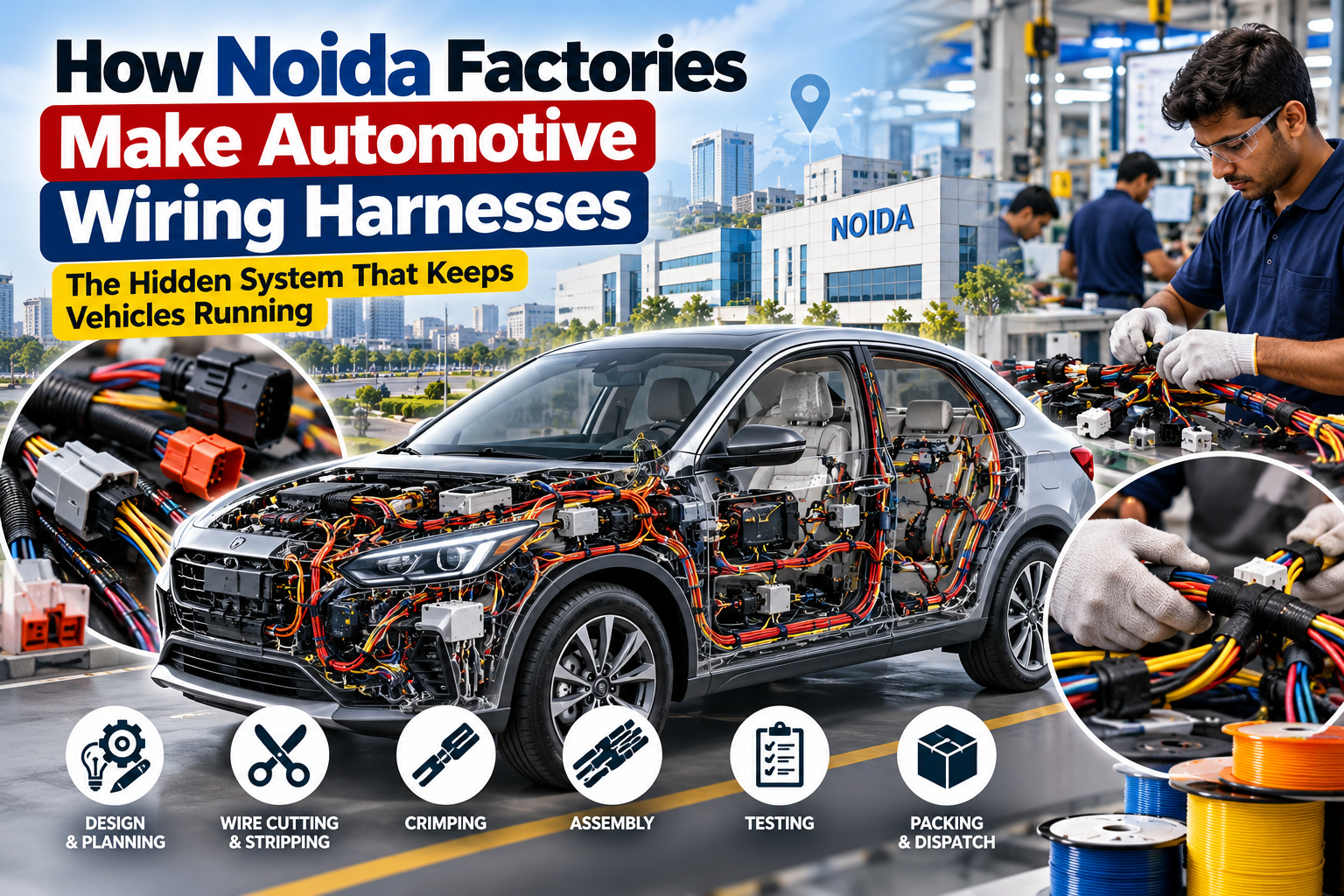
A wiring harness solves this problem. It groups many wires into one neat bundle, with connectors, terminals, clips, tape and protective sleeves attached. The bundle follows a fixed path inside the vehicle, much like nerves in the human body. That is why people often call it the “nervous system” of a car.
Why Is Noida a Good Place for This Industry?
Noida and Greater Noida are planned industrial areas, and several things work in their favour:
Great location: Noida is close to major car and bike makers and their supplier networks in Gurugram, Manesar, Bhiwadi and nearby areas. Reaching customers is easy.
Skilled workers: Electronics assembly has been done in Noida for years. Workers already know soldering, crimping and testing, so training takes less time.
Easy access to materials: Copper wire, connectors, terminals and insulation materials are available from many suppliers across NCR.
Good connectivity: Expressways and the metro network help goods and people move smoothly.
How a Harness Is Made in a Factory
Let us walk through what actually happens on the factory floor.
1. Design and Drawing
Everything starts with a wiring diagram from the car or bike company. It shows which wire goes where, how long it should be, what colour it should be, and which connector it needs. Factory engineers turn this diagram into a production-ready plan.
2. Wire Cutting and Stripping
Wire is pulled from large spools into automatic machines. The machines cut each wire to the exact length and remove the insulation from both ends. Accuracy is very important here, because even a small mistake can cause fitting problems later.
3. Crimping
A metal terminal is attached to the end of the wire. This is called crimping, and it is one of the most sensitive steps. A loose crimp can cause a broken connection or overheating while the vehicle is running. So factories regularly check crimp height and pull strength.
4. Sub-Assembly
Small groups of wires are joined separately. For example, the dashboard, the doors and the engine bay each get their own smaller harness. These are later joined into the main harness.
5. Final Assembly on the Board
This is where most of the hands-on work happens. A large board shows the full layout of the harness. Workers place the wires along the layout, fit connectors, and tie the bundle with tape or clips. Human skill is still very important here, because each vehicle model needs a slightly different harness.
6. Testing
Every finished harness goes through electrical tests. A continuity test checks that each wire is connected to the right place. An insulation test checks for short circuits. Many factories test 100% of their products, so no piece goes out unchecked.
7. Packing and Dispatch
After passing the tests, the harness is labelled with a part number and batch number. It is then packed carefully and sent to the vehicle maker or a Tier-1 supplier.
Which Vehicles Use These Harnesses?
Noida units make harnesses for different types of vehicles:
Two-wheelers: Small and compact harnesses for bikes and scooters
Passenger cars: Complex, multi-branch harnesses for hatchbacks, sedans and SUVs
Commercial vehicles: Heavy-duty harnesses for trucks and buses that handle more current and vibration
E-rickshaws and EVs: High-voltage cables and battery connections for electric vehicles
As electric vehicles become more popular, demand is changing. EVs need extra safety and shielding for high-voltage wiring, so many factories are upgrading their technology.
Quality Standards Factories Follow
Wiring is a safety matter, so there is no room for shortcuts. Good factories in Noida focus on these points:
Material quality: They use pure copper conductors and flame-retardant insulation to reduce fire risk.
Traceability: Each harness can be traced to the day, machine and operator that produced it. If a problem appears, finding the cause is easier.
Certifications: Companies that follow standards like IATF 16949 earn more trust from big customers.
Environmental testing: Harnesses are tested for heat, cold, moisture, dust and vibration, because vehicles run in all kinds of conditions.
Automation and Manual Work Together
Many people think robots do everything today. In reality, wiring harness making uses both machines and human hands. Cutting, stripping and crimping are repetitive jobs, so machines handle them well. But final routing and taping are still mostly done by hand, since wires are flexible and hard for machines to manage.
Noida factories understand this balance. They invest in machines for speed and accuracy, and they also value their skilled workers.
Challenges Factories Face
Like any industry, this one has its problems:
Copper prices: They go up and down, which affects costs.
Tight delivery schedules: Car makers work on a just-in-time system, so even one day of delay can cause big losses.
Keeping skilled workers: Retaining trained staff is not easy.
Changing technology: New models, new connectors and EV needs require constant updates.
Still, factories that focus on planning, quality and training handle these challenges well.
Impact on the Local Economy
This industry does more than make car parts. A single harness factory gives jobs to operators, supervisors, quality inspectors, drivers and packing staff. Nearby small vendors also benefit by supplying tools, packaging and canteen services. In this way, one factory supports many families in the area.
What Does the Future Look Like?
Three trends will shape the industry in the coming years:
Electric vehicles: More battery and motor wiring means new types of harness will be needed.
Smart features: Cameras, sensors and driver-assist systems are increasing the number of wires in each vehicle.
Lightweight design: Research on aluminium wiring and thinner wires is helping reduce vehicle weight.
With its mix of technology and manufacturing strength, Noida looks well prepared for these changes.
Choosing the Right Electronics Partner
If you are looking for wires, cables or electronic components for a project, ask three simple questions before choosing a supplier: Is the quality good? Is delivery on time? Do they understand my specific needs? A reliable partner can save you both time and money.
You can also take a look atHS Electronics to explore electronics and related solutions.
Conclusion
Automotive wiring harnesses may stay hidden inside vehicles, but they keep everything running. Noida factories use a careful mix of design, machines, skilled workers and strict testing to build them. With the growth of electric and smart vehicles, this industry will only become more important. The next time you sit in a car, remember that a neatly built harness is quietly working behind the dashboard to keep your ride safe and smooth.