Connector Types Explained: A Noida Buyer’s Quick Reference
09 Oct 2026
H.S. Electronics
7 Min Read
Walk into any electronics component market in Noida, and you will quickly realise there is no single “connector”, there are dozens of variations, each designed for a slightly different job. For buyers sourcing components for the first time, this can feel overwhelming fast.
This guide breaks down the most commonconnector types you are likely to come across, in plain, simple language, so you can order the right one with confidence.
Why Connector Type Actually Matters
Picking the wrong connector is not just a minor inconvenience. It can mean a loose, unreliable connection, a part that does not physically fit, or in worse cases, a safety risk from an improperly rated component. Understanding the basic categories helps you ask the right questions and avoid costly mistakes.
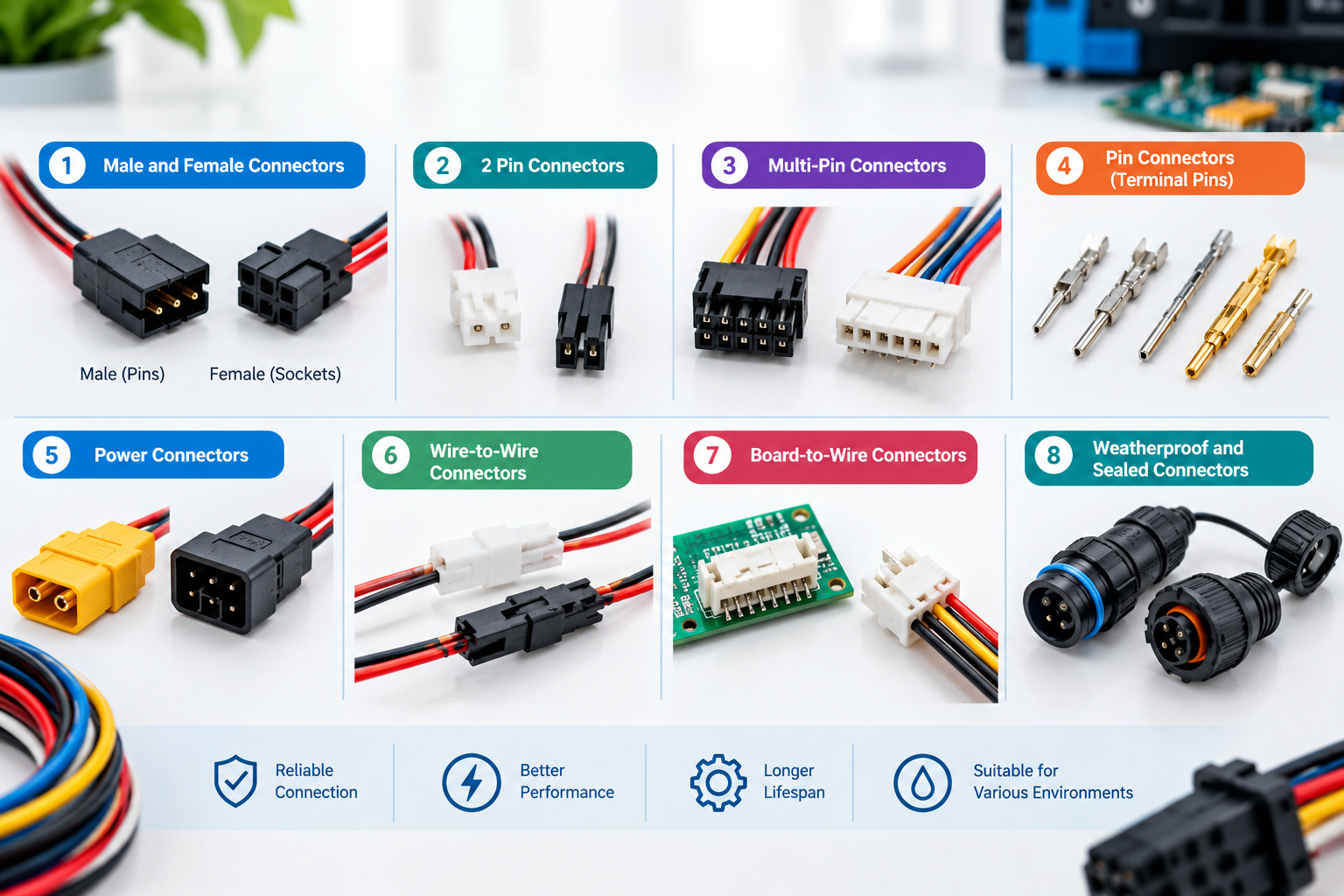
1. Male and Female Connectors
This is the most fundamental distinction, and almost every other connector type builds on this basic idea.
Amale female connector pair consists of two matching halves: the male side has pins or prongs that stick outward, while thefemale connector has matching sockets designed to receive them. Together, they form a secure, removable connection, allowing you to plug and unplug a circuit without permanent soldering.
This pairing shows up across nearly every category of connector listed below, it is the basic mechanism, not a standalone type on its own.
2. 2 Pin Connectors
A2 pin connector is exactly what it sounds like, a housing with two contact points, used for simple two-wire circuits. This is one of the most widely used connector types in both consumer and industrial applications.
Common uses include:
Basic power supply connections
LED lighting strips
Small motors and fans
Battery connections in compact devices
Its simplicity is its biggest strength. For a straightforward two-wire circuit, there is rarely a need for anything more complex.
3. Multi-Pin Connectors
Beyond the basic 2 pin option, many applications need more than two conductors. Multi-pin connectors, available in configurations like 3, 4, 6 pins or more, are used when a circuit needs to carry multiple signals or power lines through a single connection point.
These are common in applications like control panels, sensor arrays, and more complex wiring harnesses where several circuits need to be bundled and connected together at once.
4. Pin Connectors (Terminal Pins)
Apin connector often refers to the individual metal contact within a connector housing, the part that actually makes physical contact to transfer current. These terminal pins are crimped or soldered onto wire ends and then inserted into a connector housing.
The quality of these pins matters a lot. Poor plating or loose crimping can lead to resistance, heat build-up, or intermittent connections over time, issues that are often hard to diagnose once the product is assembled.
5. Power Connectors
Apower connector is specifically designed to carry higher current loads safely, used in applications like power supplies, chargers, and devices drawing significant electrical load. These connectors are typically built with thicker contacts and more robust housings than standard signal connectors, since they need to handle more heat and current without failing.
When sourcing power connectors, always check the current and voltage rating carefully, using an undersized connector for a high-power application is a common and avoidable mistake.
6. Wire-to-Wire Connectors
These connectors join two separate wires or cables together, without connecting to a circuit board or device directly. They are commonly used for extending wire length, splicing circuits, or creating a detachable joint within a longer wiring run.
Wire electrical wire connections of this type are especially useful in applications like extension cables, automotive wiring extensions, or any setup where a wire run needs a disconnect point partway through its length.
7. Board-to-Wire Connectors
These connectors allow a wire to plug directly into a printed circuit board or control panel. They are common in electronic devices, control systems and appliances where wires need to connect cleanly to internal circuitry without permanent soldering.
This connector type makes assembly, repair and replacement significantly easier, since a faulty wire or board can be swapped out without desoldering connections throughout the device.
8. Weatherproof and Sealed Connectors
For outdoor, automotive or industrial applications exposed to moisture, dust or vibration, standard connectors are often not enough. Weatherproof connectors include rubber seals or gaskets that keep out water and debris, protecting the connection point from the elements.
These are especially important for applications like outdoor lighting, automotive wiring, and any equipment exposed to Noida’s monsoon season or dusty industrial environments.
How to Choose the Right Connector for Your Application
1. Count Your Circuit Requirements
Start with the basics, how many wires actually need to connect at this point? A simple two-wire circuit needs only a 2 pin connector, while more complex applications need multi-pin options.
2. Check the Current and Voltage Load
Match the connector’s rating to your actual electrical load. An undersized connector for a high-current application can overheat or fail, even if it physically fits.
3. Consider the Environment
Will this connection be exposed to moisture, vibration or extreme temperatures? If so, a weatherproof or ruggedised connector is worth the extra cost compared to a standard indoor option.
4. Think About How Often It Will Be Disconnected
Connectors designed for frequent plugging and unplugging, like those used in testing or maintenance, need to be more durable than ones meant for a one-time, permanent installation.
Quality Matters as Much as Type
Choosing the right connector type is only half the job. The actual build quality, contact plating, housing material and crimping precision, directly affects how reliable yourelectrical wiring connectors perform over time. A poorly made connector of the right type can still fail prematurely, especially under vibration or repeated use.
When sourcingelectronics products involving connectors, always ask about the material grade and whether the supplier tests connections before dispatch.
A Quick Reference Checklist
Count how many conductors your circuit actually needs
Match the connector rating to your voltage and current requirements
Decide if you need a weatherproof or standard indoor connector
Consider how frequently the connection will be made and broken
Check contact plating and housing material quality
Request a sample to confirm fit and connection strength before bulk ordering
Final Thoughts
Connectors might seem like a small, simple component, but choosing the right type, and the right quality, directly affects how reliably your product or installation performs over time. Understanding these basic categories gives you a solid foundation for sourcing the right component with confidence.
If you are looking for reliable connectors, wiring harnesses or related components in Noida, reach out toHS Electronics. Share your application details, and the team can guide you toward the rightwiring connectors for your specific needs.