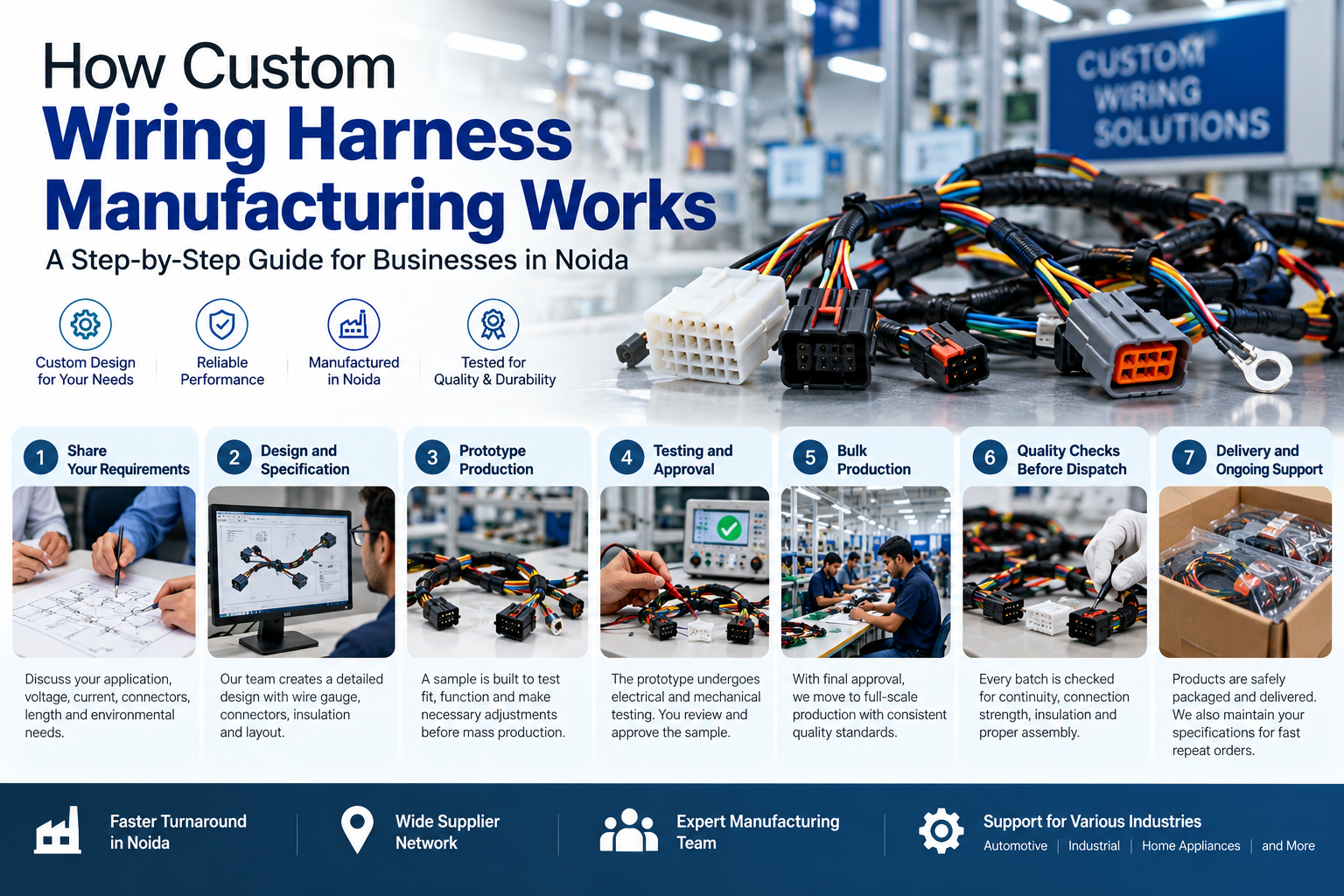
Not every product fits neatly into a standard, off-the-shelf wiring solution. Sometimes the space is unusual, the voltage requirements are specific, or the connector layout simply does not match anything available on a shelf. That is exactly when a business turns to custom wiring manufacturing instead of a generic product.
If you have never gone through this process before, it can feel a little intimidating. This guide breaks down how custom wiring harness manufacturing actually works in Noida, step by step, in simple words.
Why Businesses Choose Custom Over Standard Harnesses
A standard wiring kit works fine for common, well-defined applications. But many products need something more tailored:
A specific wire length or routing path that off-the-shelf options cannot match
Non-standard connector types required by a particular device
Unique voltage or current ratings for specialised equipment
Tight space constraints that demand a precisely designed bundle
Branding or colour-coding requirements specific to the client's product line
For these situations, working with an experienced electronics manufacturer who can build to exact specification is often the only practical path forward.
Step 1: Sharing Your Requirements
The process begins with a detailed conversation about what you actually need. A good manufacturer will ask specific questions rather than jumping straight to a quote:
What is the application, automotive, industrial, home appliance, or something else?
What voltage and current will the harness carry?
How many wires and connectors are needed, and in what configuration?
What is the required length, and are there any routing constraints?
Does the harness need to handle vibration, heat, or outdoor exposure?
The more detail you can share upfront, drawings, product samples, or even rough sketches, the more accurate the final design will be.
Step 2: Design and Specification
Based on your requirements, the manufacturer will put together a design specification, covering wire gauge, connector types, insulation, and overall layout. This is the stage where technical decisions get finalised, and it is worth asking questions if anything is unclear.
A reliable electrical harness manufacturers partner will explain the reasoning behind their choices, why a particular wire gauge suits your current load, or why a specific connector type fits your application better than an alternative.
Step 3: Prototype or Sample Production
Before committing to a full production run, most manufacturers will build a small batch or a single prototype first. This step is important, and skipping it is a common mistake businesses make when trying to save time.
A prototype lets you:
Physically test the fit within your product
Confirm electrical performance under real conditions
Catch design issues early, before they become expensive at scale
Make adjustments to length, connector placement, or wire routing if needed
Step 4: Testing and Approval
Once the prototype is ready, it goes through testing, checking continuity, insulation resistance, and overall connection strength. For applications like automotive wiring harness systems, this step often includes checking how the harness holds up under vibration or repeated flexing, since these conditions are common in vehicle use.
Only after you approve the sample, confirming it meets your fit, function and durability requirements, should the manufacturer move to full-scale production.
Step 5: Bulk Production
With the design finalised and approved, the manufacturer moves into full production. A good facility will maintain the same quality standards across every batch, not just the carefully prepared prototype. This is where working with an experienced wiring harness manufacturers team really matters, consistency at scale is far harder to achieve than a single good sample.
Step 6: Quality Checks Before Dispatch
Reliable manufacturers run quality checks on production batches before shipping, not just at the prototype stage. This typically includes continuity testing, visual inspection for consistent wiring connectors placement, and checks for proper insulation and bundling across the full order.
Step 7: Delivery and Ongoing Support
Once approved, the harnesses are packaged and delivered. For businesses with recurring needs, a good manufacturer will also keep your specifications on file, making repeat orders faster and more consistent, since the design and testing groundwork has already been done.
What Makes Noida a Practical Choice for Custom Manufacturing
Noida's concentration of wiring and harness manufacturers and related component suppliers makes it a genuinely practical location for custom work. Being based here, or working with a Noida-based manufacturer, offers real advantages:
Faster turnaround on prototypes and revisions
Easier in-person visits for design discussions or quality checks
Access to a wider local network of connector and material suppliers
Quicker response times for urgent custom requirements
Common Mistakes to Avoid When Ordering Custom Harnesses
1. Skipping the Prototype Stage
Jumping straight to bulk production to save time often backfires, since any design flaw gets multiplied across the entire order.
2. Providing Incomplete Specifications
Vague requirements lead to guesswork. Share as much detail as possible upfront, exact measurements, connector part numbers if known, and the real-world conditions the harness will face.
3. Choosing Price Over Quality
The cheapest quote often comes from cutting corners on wire gauge or connector quality. For custom applications especially, a failure can be far more costly than the savings from a lower initial price.
4. Not Asking About Testing Procedures
Always confirm what testing happens before dispatch, not just at the prototype stage. Consistency across a full production run matters just as much as getting the first sample right.
Questions to Ask Before Starting a Custom Project
Can you provide a prototype before committing to bulk production?
What testing do you perform at both the sample and production stages?
How do you ensure consistency across a large order?
Can you work from drawings, samples, or rough specifications?
What is the typical turnaround time from design approval to delivery?
Final Thoughts
Custom wiring harness manufacturing does not have to feel complicated once you understand the process: share your requirements, approve a prototype, confirm testing, then move to production with confidence. Working with an experienced, Noida-based manufacturer makes this entire journey smoother, faster and more reliable.
If your business needs a wiring harness built to exact specifications, reach out to HS Electronics. Share your application details and requirements, and the team can guide you through the design, prototyping and production process, built right for your specific needs.