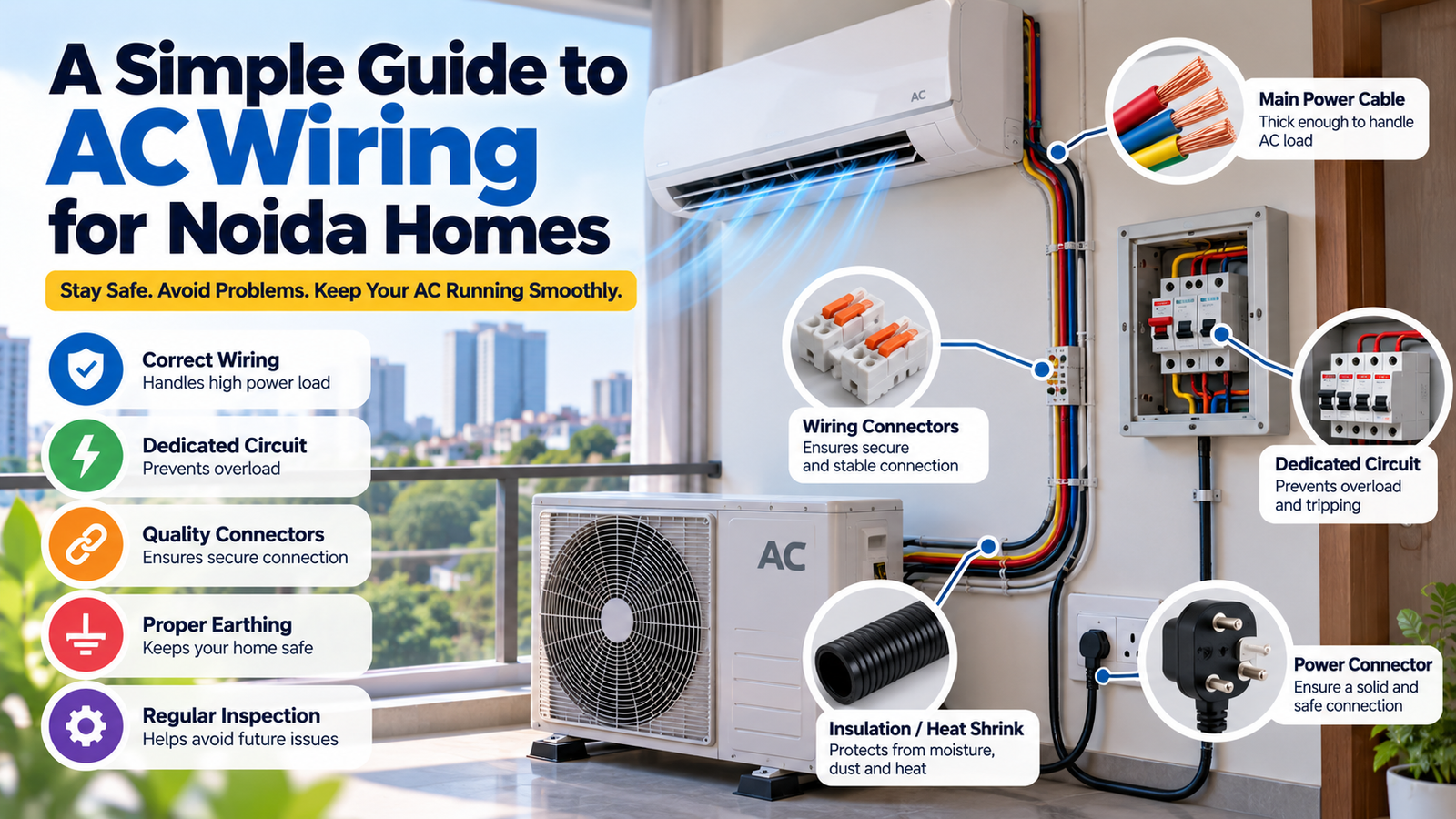
AC Wiring Basics: What Noida Homeowners Should Know
07 Oct 2026
H.S. Electronics
7 Min Read
Noida summers get brutal, and for most homes, the air conditioner is not a luxury anymore, it is a necessity. But behind every smoothly running AC unit is something most homeowners never think about until it fails: theac wiring connecting it safely to your home's power supply.
Understanding the basics of this wiring will not turn you into an electrician, but it will help you ask the right questions, spot warning signs early, and make smarter decisions when installing or servicing your AC. Here is a simple, practical guide.
Why AC Wiring Deserves Special Attention
Air conditioners draw significantly more power than most other household appliances. A fan or a light bulb runs on a small, steady current. An AC unit, especially during startup, pulls a much larger load. This means theelectrical wiring feeding your AC needs to be rated correctly for that demand, not just connected to any nearby socket.
Using wiring that is not built for this kind of load is one of the most common, and most dangerous, mistakes homeowners make, often without realising it until something overheats or trips repeatedly.
The Core Components of AC Wiring
1. The Main Power Cable
This is the primaryair conditioning wire that carries electricity from your home's distribution board to the AC unit. It needs to be thick enough, in terms of wire gauge, to handle the unit's power rating without overheating.
2. A Dedicated Circuit
Most AC units, especially split and window ACs above a certain capacity, should ideally run on their own dedicated circuit, rather than sharing a line with other heavy appliances. This reduces the risk of overload and makes it easier to isolate the AC if a problem occurs.
3. Connectors and Terminal Points
Wherever wires connect to the unit, the plug, the indoor and outdoor unit junctions, or the circuit breaker, properwiring connectors ensure a secure, stable connection. Loose or poor-quality connectors are a common cause of intermittent power issues and, in worse cases, overheating.
4. The Power Connector or Plug
For window ACs or portable units, a solidpower connector matters just as much as the wiring itself. A worn-out or loose-fitting plug can cause sparking, inconsistent power, or even damage to the unit over time.
5. Insulation and Protection
Good quality insulation, sometimes includingheat shrink tubing over exposed joints, protects wiring from moisture, dust and accidental contact. This matters even more for outdoor unit connections, which are directly exposed to Noida's weather, heat, humidity and monsoon rain alike.
Common AC Wiring Problems in Noida Homes
1. Undersized Wiring
Many older homes were wired decades before high-capacity ACs became common. If your home's wiring was never upgraded, it may not be rated for a modern AC's power draw, leading to overheating, frequent tripping, or in serious cases, fire risk.
2. Shared Circuits With Other Heavy Appliances
Running your AC on the same circuit as a geyser, microwave or heavy kitchen appliance increases the risk of overload, especially during Noida's peak summer months when multiple appliances often run simultaneously.
3. Poor Quality or Aging Connectors
Over time, connectors can loosen, corrode, or simply wear out. This is especially common in outdoor unit connections exposed to weather, where a poor qualityelectricity cord or connector can degrade faster than expected.
4. Incorrect Earthing
Proper earthing is essential for AC safety, protecting both your home and your family from electrical faults. Skipped or poorly done earthing is a surprisingly common issue, particularly in older installations or rushed, budget installations.
Signs Your AC Wiring May Need Attention
Watch for these warning signs, they are worth taking seriously rather than ignoring:
The circuit breaker trips frequently when the AC starts
You notice a burning smell near the AC unit, plug point or wiring
The plug or socket feels warm to the touch
Flickering lights elsewhere in the house when the AC turns on
Visible wear, fraying or discolouration on wires or connectors
If you notice any of these, it is worth getting a qualified electrician to inspect the wiring before continuing to use the unit regularly.
What to Check Before Installing a New AC
1. Confirm Your Home's Wiring Can Handle the Load
Before installing a new or higher-capacity AC, especially in an older home, check whether your existingwire for home electrical setup is rated for the additional power draw. This is particularly important if you are upgrading from a smaller unit to a larger one.
2. Use a Dedicated Circuit Where Possible
If your home does not already have one, consider having an electrician set up a dedicated circuit for the AC. This small investment upfront can prevent a lot of frustration, and risk, down the line.
3. Choose Quality Components
Whether it is the main cable, connectors, or awiring kit for the installation, quality matters far more here than for low-power appliances. Cheaper, lower-grade components are far more likely to fail under the sustained load an AC places on them.
4. Ask About Proper Earthing
Confirm with your installer that proper earthing is part of the installation, not an optional extra. This is a basic safety requirement, not a luxury upgrade.
Simple Maintenance Tips for Homeowners
Get your wiring inspected periodically, especially before peak summer season begins.
Avoid overloading the same circuit with other heavy appliances running simultaneously.
Check the plug and socket occasionally for warmth, discolouration or looseness.
Keep outdoor unit wiring protected from direct rain exposure where possible.
Never ignore repeated tripping, it usually signals a real underlying issue, not just a minor glitch.
When to Call a Professional
While understanding the basics helps you stay informed, AC wiring work itself should always be handled by a qualified electrician. This is not an area for DIY shortcuts, incorrect wiring can lead to appliance damage, fire risk, or serious electrical hazards for your family.
Final Thoughts
AC wiring might be invisible once the installation is complete, but it plays a critical role in how safely and efficiently your air conditioner runs, especially through Noida's demanding summer months. Understanding the basics, dedicated circuits, proper gauge wiring, quality connectors and correct earthing, helps you ask the right questions and spot problems early.
If you need reliableelectrical harness, connectors or wiring components for your AC installation or any other electrical project, reach out toHS Electronics. Share your requirements, and the team can guide you toward the right components for a safe, dependable setup.