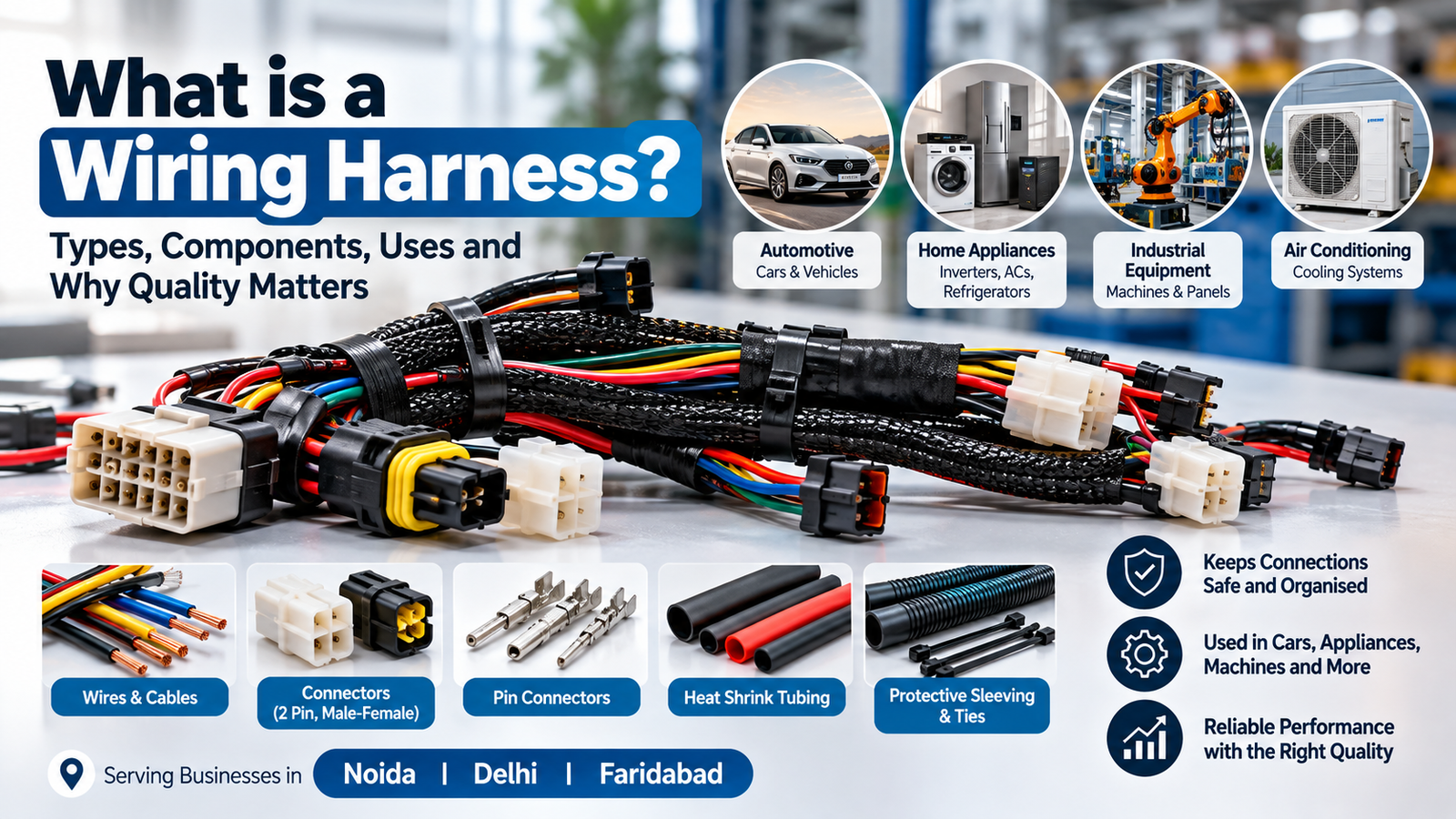
Open up almost any machine, vehicle or appliance, and somewhere inside you will find a neat bundle of wires, carefully organised, bound together and routed exactly where they need to go. This bundle is called a wiring harness, and even though most people never see it, it quietly keeps everything from your car to your home inverter running safely.
If you are a business owner in Noida, Delhi or Faridabad sourcing electrical components, understanding what a wiring harness actually is, and why its quality matters, can save you from costly failures down the line.
What Exactly Is a Wiring Harness?
A wiring harness, sometimes called an electrical harness, is a set of wires, cables or electrical wiring bundled together using tape, conduit, cable ties or a sleeve. Each wire in the bundle is routed to a specific point, usually ending in a connector that plugs into a device, panel or component.
Instead of individual wires running loosely all over a product, a proper wiring and harness setup groups them neatly, protects them from damage, and makes installation, maintenance and troubleshooting far easier.
Why Not Just Use Loose Wires?
It is a fair question. Technically, loose wire electrical wire connections can work. But in practice, this approach creates serious problems:
- Loose wires are prone to loosening, fraying or getting damaged over time
- They are harder to route cleanly inside tight spaces
- They increase the risk of short circuits from accidental contact
- They make repairs and replacements far more time-consuming
- They look unprofessional in any finished product
A properly built harness solves all of these problems at once, which is why almost every serious electrical or electronic product relies on one.
Where Are Wiring Harnesses Used?
The honest answer is: almost everywhere. A few common applications include:
Automotive: Vehicles rely heavily on automotive wiring harness systems to connect everything from the engine to the lights, dashboard and entertainment system. An auto wiring harness manages dozens of circuits in a single, organised bundle.
Home appliances: Inverters, UPS systems, air conditioners and refrigerators all depend on internal wiring harnesses to function safely and reliably.
Industrial equipment: Machines on a factory floor often use custom harnesses designed for their specific voltage, current and space requirements.
Power and cooling systems: An air conditioning wire harness, for example, manages the multiple electrical connections inside a cooling unit, from the compressor to the control panel.
Key Components of a Wiring Harness
A typical harness is built from several core parts working together:
1. Wires and Cables
The actual conductors carrying electrical current. Quality here matters a lot, poor quality electrical wiring can overheat, degrade faster, or fail under load.
2. Connectors
This is where one part of a circuit meets another. Common types include the 2 pin connector, female connector, and male female connector setups, which allow components to be joined and separated without permanent wiring.
3. Pin Connectors
A pin connector holds individual wire ends in place within a connector housing, ensuring a secure and consistent electrical connection every time the parts are plugged in.
4. Heat Shrink Tubing
A heat shrink tube is used to insulate and protect individual wire joints or connector ends. When heated, it shrinks tightly around the wire, sealing out moisture and preventing accidental short circuits.
5. Protective Sleeving and Ties
These hold the bundle together and protect it from abrasion, heat and movement, extending the harness's working life significantly.
Why Quality Matters So Much
A wiring harness might look like a small, simple component, but it carries real responsibility. A poorly made harness can lead to:
- Overheating and fire risk
- Intermittent power failures that are hard to diagnose
- Equipment damage from unstable connections
- Costly downtime for repairs or replacements
This is exactly why working with experienced wiring harness manufacturers matters. A manufacturer who understands wire gauge selection, proper connector matching and correct insulation will build a harness that performs reliably for years, not months.
Custom vs Standard Harness Solutions
Not every application needs the same harness. Some businesses can use a standard, off-the-shelf wiring kit, especially for simple, common setups. Others need a fully custom-built harness, tailored to their product's exact voltage, length and connector requirements.
Experienced electrical harness manufacturers will usually ask detailed questions about your application before recommending a standard or custom solution, since getting this wrong can lead to performance issues later.
Choosing a Reliable Wiring Harness Manufacturer in Noida, Delhi or Faridabad
This belt around Delhi NCR, covering Noida, Delhi and Faridabad, is home to a strong base of electrical and electronics manufacturer units, making it a practical place to source wiring harnesses without relying on far-away suppliers. When evaluating a potential partner, consider:
1. Manufacturing Experience
Ask how long the company has been building harnesses, and whether they have experience with your specific application, whether that is automotive, home appliances or industrial equipment.
2. Component Quality
A good electronic manufacturer will use quality-tested wires, connectors and heat shrink materials rather than the cheapest available options. Ask about the grade of components used in your harness.
3. Customisation Capability
If your product has specific space, voltage or connector requirements, confirm the manufacturer can build to your exact specification rather than forcing a generic solution.
4. Testing and Quality Checks
Reliable wiring harness companies test their harnesses for continuity, insulation and connection strength before shipping, reducing the risk of failures after installation.
5. Local Support and Turnaround
Working with a supplier based in Noida, Delhi or Faridabad means faster sampling, easier communication and quicker turnaround for both new orders and urgent repeat supply.
A Quick Checklist Before You Order
- Clearly share your application: automotive, home appliance, industrial, or other
- Specify your voltage, current and length requirements
- Confirm the type of connectors needed, such as 2 pin, male-female or pin-style
- Ask about the quality of wire, connector and heat shrink materials used
- Request a sample harness before committing to a bulk order
- Confirm testing procedures the manufacturer follows before dispatch
Final Thoughts
A wiring harness may be hidden inside your product, but its quality directly affects how safely and reliably that product performs. Understanding the basics, what it is, what it is made of, and why proper manufacturing matters, helps you ask the right questions when sourcing one.
If your business in Noida, Delhi or Faridabad needs a dependable wiring harness, power connector or electrical wiring solution, reach out to a trusted local manufacturer who can guide you through the right specifications for your specific application, and build it right the first time.